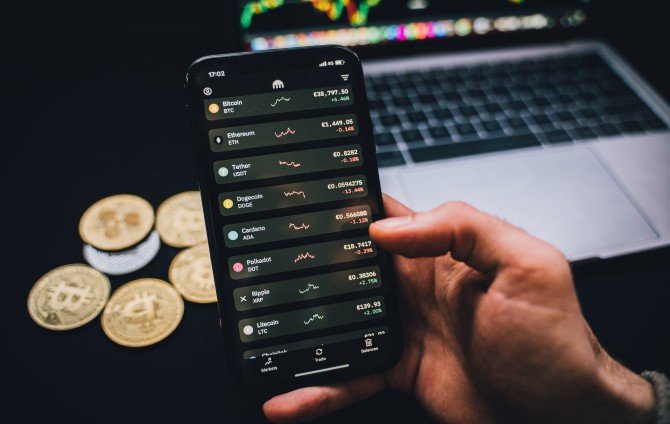
Blockchain.com closes crypto custody for Russians amid EU sanctions
Blockchain.com Closes Crypto Custody for Russians Amid EU Sanctions
March 24, 2025 | By Ledger Finounce Blog
In one of the most notable moves in the global cryptocurrency industry this year, Blockchain.com, a leading digital asset wallet and trading platform, announced that it will be suspending all custody and trading services for Russian nationals and residents. The announcement follows the latest wave of sanctions issued by the European Union (EU), which specifically targeted the use of cryptocurrencies as a means of bypassing traditional financial restrictions.
This decision underscores the increasing influence of international politics on the cryptocurrency sector, which until recently was seen as a largely borderless and neutral technology. Now, exchanges and custodial platforms are finding themselves at the center of geopolitical disputes, with compliance becoming a matter of survival.
Background on EU Sanctions
Since the escalation of the conflict in Ukraine, the European Union has adopted multiple sanction packages against Russia. These measures were originally aimed at traditional finance, such as restrictions on SWIFT access and the freezing of state-owned bank assets. However, as crypto adoption accelerated in Russia, policymakers in Brussels grew concerned that Bitcoin, stablecoins, and other digital assets could serve as loopholes for moving capital across borders.
The EU’s most recent legislation goes beyond banking restrictions by explicitly naming digital asset service providers as entities that must comply with sanctions. This includes exchanges, wallet providers, and custodians operating under European jurisdiction. The new rules prohibit these companies from offering any form of custody, transfer, or storage services to Russian individuals or entities.
Blockchain.com's Official Response
Blockchain.com confirmed in a statement that it would be halting custody, wallet, and trading services for Russian users effective immediately, with a grace period provided for withdrawals. Affected customers were advised to remove their funds as soon as possible. After the grace period, all remaining accounts will be frozen to comply with EU regulations.
The company stressed that this was not a voluntary business choice but a matter of regulatory necessity. By continuing to serve Russian clients, Blockchain.com risked significant penalties, loss of licenses, and potential blacklisting in European markets. Compliance, therefore, was seen as the only viable path forward.
Impact on Russian Crypto Users
For many Russians, cryptocurrency became a financial lifeline after the imposition of sanctions on the country’s banking sector. As the ruble fluctuated and inflation soared, stablecoins like USDT and USDC provided a way to preserve value, while Bitcoin and Ethereum offered global liquidity.
With Blockchain.com and other major exchanges closing their doors, Russian users may turn to decentralized platforms, peer-to-peer (P2P) exchanges, or offshore providers that are not bound by EU laws. However, these alternatives often come with greater risks, including scams, higher fees, and lack of regulatory protections.
Analysts predict that decentralized finance (DeFi) protocols may see a rise in Russian activity, as they are harder to police and generally do not involve centralized custodians. Still, DeFi use requires technical expertise, and the lack of fiat on-ramps poses a significant barrier for average users.
Reactions from the Crypto Community
The crypto community has been divided in its response. Some argue that Blockchain.com’s decision reflects the growing reality that centralized exchanges must comply with global regulations. Others believe that this undermines the very ethos of cryptocurrency — that money should be borderless, permissionless, and resistant to censorship.
Industry experts have also warned that these measures may set a precedent. If one government or union can compel exchanges to cut off entire populations, similar actions could follow in other regions, potentially fragmenting the global crypto market.
Broader Implications for the Industry
The suspension highlights a key tension in the crypto industry: the balance between compliance and decentralization. Centralized platforms, while convenient and user-friendly, are vulnerable to political and regulatory pressures. Decentralized platforms, by contrast, are technically resistant to censorship but lack the scalability and security that mainstream investors demand.
This event also underscores the growing maturity of the crypto industry. What was once seen as a "wild west" is now fully integrated into global financial systems — meaning it is subject to the same political winds that shape traditional finance.
Going forward, experts expect further regulation targeting not only Russian users but also other jurisdictions deemed high-risk. Exchanges will need to invest heavily in compliance infrastructure, KYC/AML processes, and monitoring systems to maintain global access.
What Comes Next?
Russian crypto users now face a difficult choice. They can move to decentralized networks, explore less regulated exchanges, or exit the crypto markets entirely. Each path carries its own risks. Meanwhile, the international community will watch closely to see if these measures have a meaningful impact on Russia’s financial resilience.
For the broader crypto ecosystem, the Blockchain.com case is a watershed moment — one that illustrates how deeply intertwined digital assets have become with global politics. Whether this leads to greater decentralization or tighter regulation remains to be seen.
Ledger Finounce Blog will continue to track how geopolitical events are shaping the world of cryptocurrencies, with updates on regulations, market reactions, and emerging trends.